
They think it’s what users say they want.But real user needs go deeper. They connect what people are doing today with a better way your product can help them do it. That’s where value flows both ways, user and business.
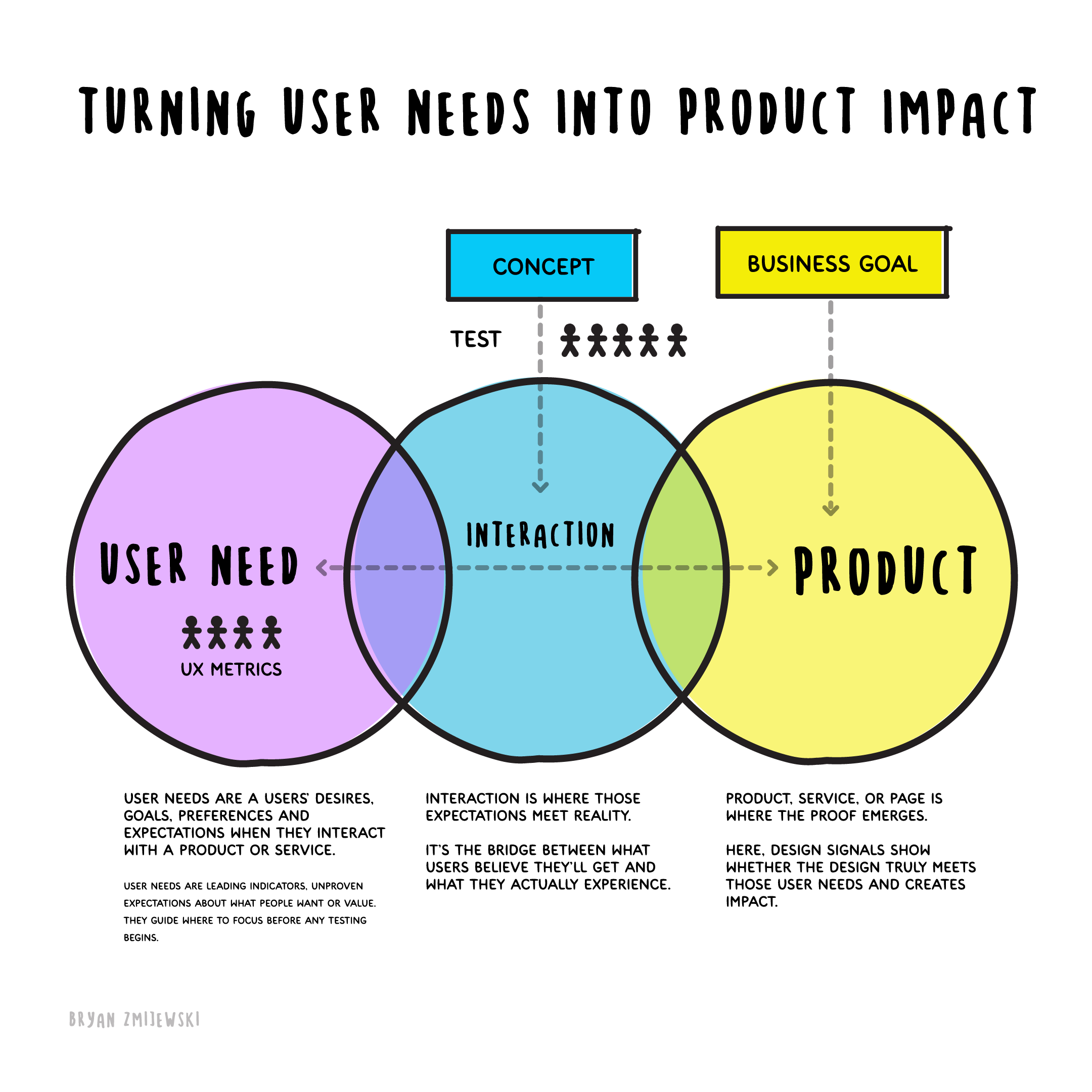
Here’s how we’ve been framing it:
→ User Need
What people expect or value before they use your product.
→ Interaction
Where expectations meet reality
→ Product
Where proof emerges that design actually meets those needs.
When you test fast and often, you don’t just validate features, you uncover patterns. You start seeing what users truly mean beneath the surface. In this scenario, user needs become a leading indicator you can measure.
Take this recent example:A user says, “I want a Save for Later button.”
Sounds simple. They just want to come back later, right?But test a few concepts, and the truth appears: They’re not asking to save their cart. They’re asking for time. For confidence. Complex purchases require more effort and alignment, especially in B2B.
Buying isn’t a button. It’s a decision. They want to compare, check, confirm. That pause could be seen as hesitation, but it’s reassurance in their mind.
The real user need isn’t save my cart. It’s help me feel confident before I buy.
When teams see that, everything changes. You stop chasing requests and start designing confidence. The problem is timing.
The real power of user needs isn’t what people tell you. It’s what lives underneath. The patterns you only find when you test, listen, and look deeper.
👉 We’re building a community of product and design leaders through Helio Glare. If you care about how design creates real value, join us: https://lnkd.in/ggHXcVQZ