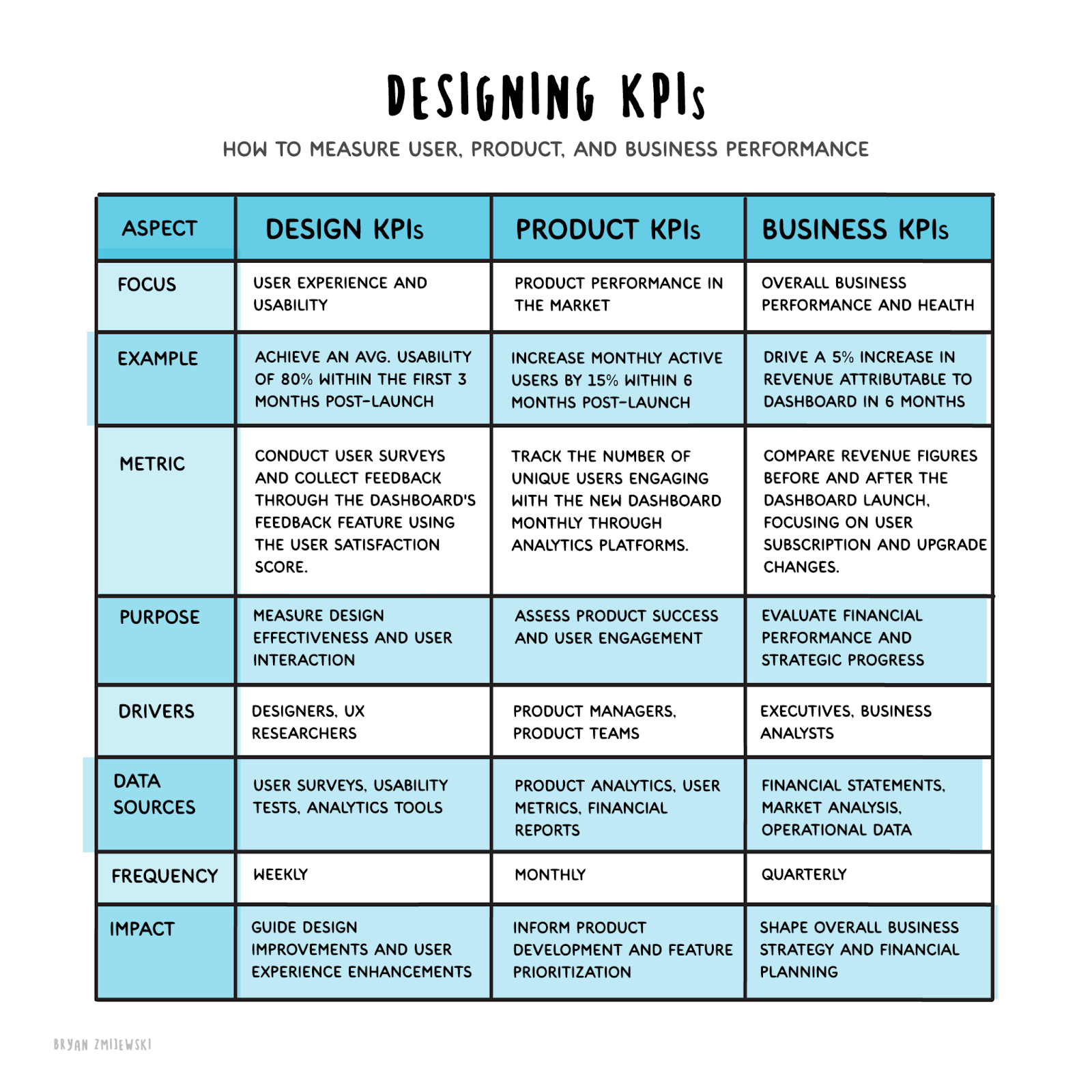
We're getting closer to launching Helio Glare, our open data-informed design framework. A key focus is connecting design metrics to business results.
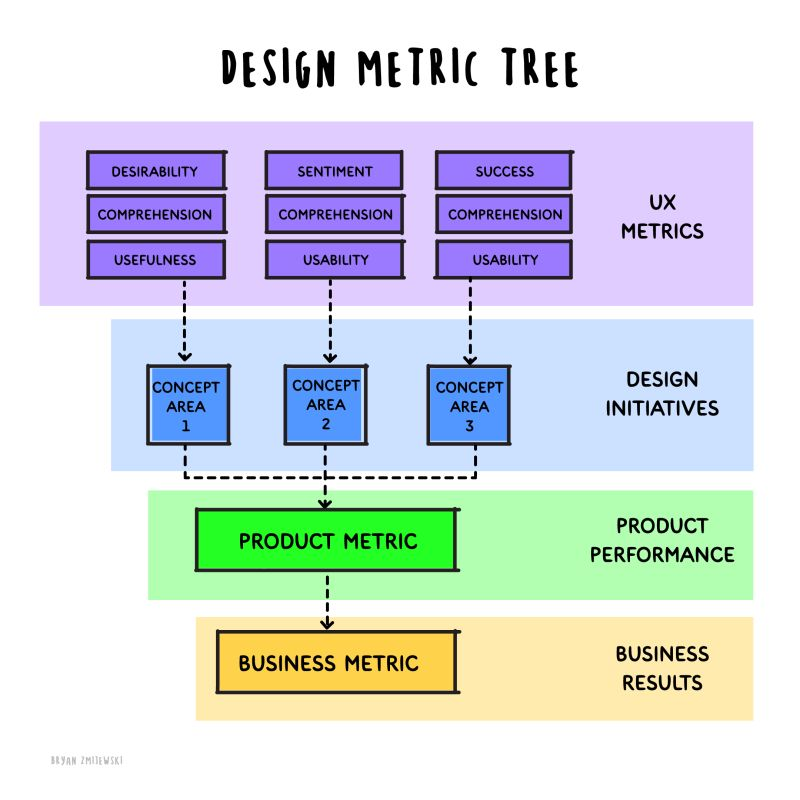
In it, we show you how to use a design metrics tree built with UX metrics.
This structures how UX metrics influence broader product and business outcomes. Here’s how it connects:
UX metrics as the foundation
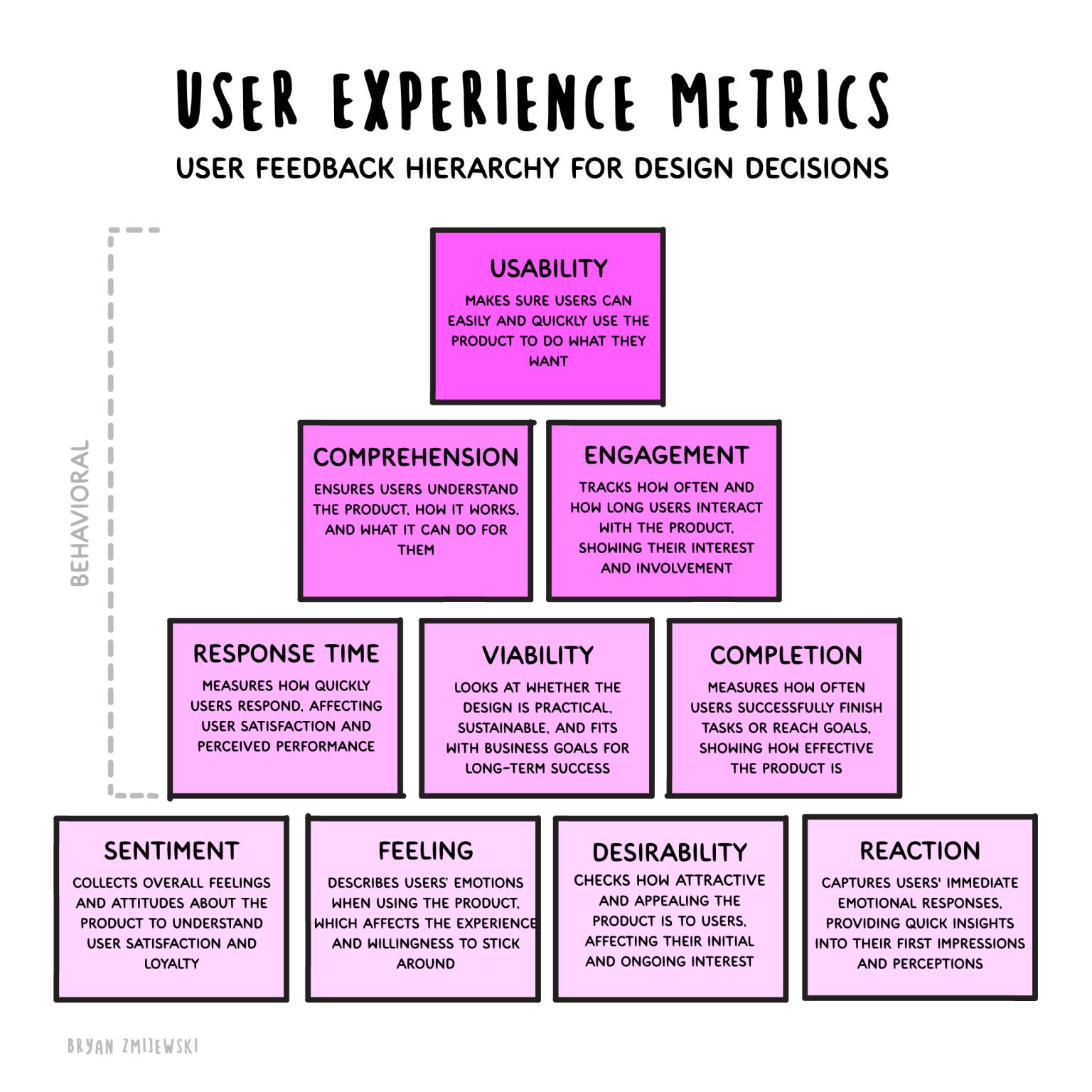
↳ UX metrics like desirability, comprehension, usefulness, sentiment, usability, and success act as the leaves of the metrics tree. These represent the measurable aspects of user experience that indicate how well a design performs in terms of user perception, interaction, and effectiveness.
Design initiatives as the branches
↳ Concept areas bridge UX metrics and product performance. These represent specific design initiatives: changes, optimizations, or experiments in design that are directly influenced by UX metric insights.
Example: If usability scores are low, a design initiative might focus on streamlining navigation or reducing cognitive load.